
Targeted Skin Tightening Greater London (Sutton) After Weight Loss: HIFU, Morpheus8 & Fat Freezing Explained
Losing weight can change more than the number on the scale. You might notice your clothes fitting differently, changes to your body shape, or areas of skin that haven’t quite adjusted to your new size.
Loose skin is particularly common after significant weight loss. It can appear around the stomach, upper arms, thighs and other areas where the skin has stretched over time.
For some people, the skin gradually settles. For others, some looseness remains.
At LA LIPO, we offer home-based cosmetic treatments, including HIFU, Collagen Lift Therapy (RF Microneedling) and Cryolipolysis. Each works differently, and not every treatment suits everyone.
Why Does Skin Become Loose After Weight Loss?
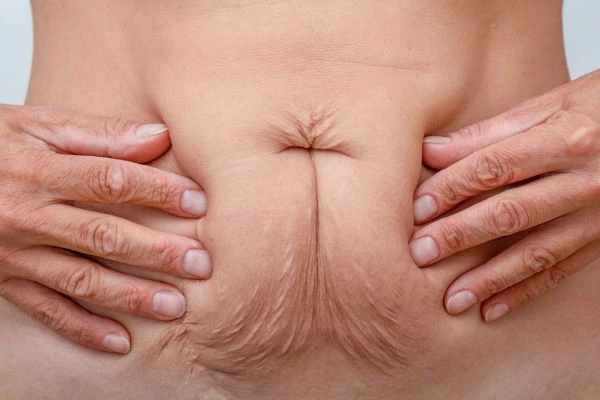
Your skin can stretch remarkably, but it doesn’t always return completely to its previous shape.
Collagen and elastin are two key proteins that help maintain the skin’s structure and elasticity. As we age, the skin’s ability to adapt changes, and prolonged stretching can also affect how it responds when body volume decreases.
Several factors can influence the amount of loose skin you notice:
- How much weight you’ve lost: Larger changes in body size may leave more excess skin.
- How long the skin was stretched: Skin stretched for many years may not retract as readily.
- Age: Natural changes in collagen and elastin can affect skin firmness.
- Genetics: Some people naturally have more elastic skin than others.
- Sun exposure and smoking: Both can contribute to changes in skin quality.
Loose skin after weight loss is normal. It doesn’t mean you’ve done anything wrong, and it doesn’t necessarily need treating.
However, if you’d like to explore cosmetic options, understanding the difference between skin laxity and remaining body fat is a useful starting point.
Can You Tighten Loose Skin Without Surgery?
This largely depends on how much loose skin is present.
Some non-surgical procedures use ultrasound or radiofrequency energy to produce controlled effects within the skin and underlying tissues. These technologies are used in cosmetic treatments intended to improve skin firmness and texture.
However, non-surgical skin tightening cannot reliably remove substantial amounts of excess skin.
People with mild skin laxity may be more appropriate candidates for certain cosmetic treatments than those with large folds of redundant skin.
Where there is significant excess skin following major weight loss, a surgical assessment may be more useful.
A consultation should clarify what you hope to change and whether a proposed treatment has a reasonable chance of addressing that concern.
Non-Surgical Skin Tightening Treatments at LA LIPO
LA LIPO offers several cosmetic technologies, although they don’t all perform the same function.
1. HIFU Skin Tightening
HIFU stands for High-Intensity Focused Ultrasound.
The technology delivers focused ultrasound energy to selected tissue depths. The controlled heating produced is intended to stimulate a tissue response associated with collagen remodelling.
HIFU is used in cosmetic procedures to address certain forms of skin laxity.
What should you know before considering HIFU?
- It doesn’t involve surgical incisions.
- It cannot remove excess skin folds.
- Any visible change depends on individual circumstances.
- Treatment may involve discomfort, tenderness or swelling.
- Less common complications, including burns or nerve-related effects, are possible.
HIFU should not be presented as equivalent to a surgical lift.
If you’re interested in the procedure, LA LIPO can explain its intended use, limitations and suitability requirements.
Read more about HIFU Skin Tightening.
2. Collagen Lift Therapy — RF Microneedling
LA LIPO’s Collagen Lift Therapy uses radiofrequency microneedling technology.
Unlike HIFU, RF Microneedling uses small needles to enter the skin while radiofrequency energy is delivered to selected tissue depths.
The treatment is used in cosmetic practice to address concerns involving skin texture and certain forms of laxity.
Following significant weight loss, however, it is important to distinguish between changes in skin quality and actual excess skin.
What does RF Microneedling involve?
The procedure creates controlled microscopic injuries in the skin while applying radiofrequency heat.
Possible reactions include redness, swelling, tenderness, pinpoint bleeding and temporary changes in skin appearance.
There are also risks of infection, scarring, pigmentation changes and burns. Some complications may require medical treatment.
RF Microneedling isn’t suitable for everyone, and the proposed treatment area, medical history and skin characteristics should all be considered.
Explore LA LIPO’s Collagen Lift Therapy
3. Cryolipolysis — Fat Freezing
Fat freezing is sometimes discussed alongside skin tightening, but there’s an important difference.
Cryolipolysis is a fat-reduction procedure, not a treatment for removing loose skin.
It uses controlled cooling to target selected areas of subcutaneous fat.
Someone who has lost weight may still have localised fat deposits. However, an area that appears loose or uneven isn’t necessarily caused by remaining fat.
Treating fat where excess skin is the main concern may not produce the appearance someone expects and could make existing laxity more noticeable.
Cryolipolysis also carries risks, including pain, bruising, swelling, altered sensation, skin injury and paradoxical adipose hyperplasia, a rare complication in which treated fatty tissue enlarges rather than reduces.
It is not a treatment for obesity or general weight loss.
Learn more about LA LIPO’s Cryolipolysis treatments.
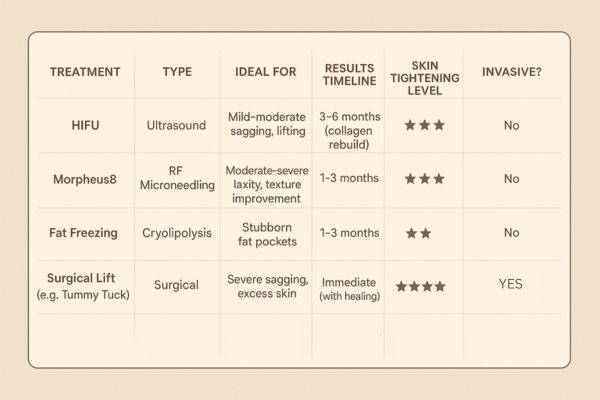
HIFU vs RF Microneedling vs Fat Freezing: What’s the Difference?
| HIFU | Uses focused ultrasound energy to heat selected tissues | Does not remove substantial excess skin |
| RF Microneedling | Uses microneedles and radiofrequency energy | Involves skin penetration and potential complications |
| Cryolipolysis | Uses controlled cooling to target localised fat | Does not directly treat loose skin |
| Surgical skin removal | Removes redundant skin through an operation | Involves surgery, scarring and recovery |
These treatments aren’t interchangeable. The best option depends on whether your concern is primarily loose skin, remaining fat, skin texture, or a combination of factors.
Can You Combine Skin Tightening and Fat Freezing?
Some people ask whether several cosmetic treatments can be used together.
Although different technologies may address different concerns, combining them doesn’t automatically produce better results.
For example, reducing a localised fat deposit will not necessarily improve the appearance of loose skin. In some circumstances, it may make skin laxity more apparent.
Using multiple energy-based procedures also introduces additional considerations around tissue response, recovery and complications.
At LA LIPO, we consider suitability on a case-by-case basis, and we explain any proposed combination before treatment.
You can also read about our Ultimate Lift & Tighten Treatment, which brings together HIFU and RF Microneedling technologies.
What Results Can You Expect From Non-Surgical Skin Tightening?
This is one of the most important questions to ask before booking.
Non-surgical procedures cannot promise that loose skin will disappear, and the degree of visible change can vary considerably.
The response may depend on:
- The amount and location of skin laxity
- Skin quality and individual tissue response
- The specific equipment and treatment settings
- Relevant medical history and contraindications
- Whether weight is continuing to change
Any treatment-related changes may take time to become apparent. Some people may notice little or no visible improvement.
Before proceeding, ask your practitioner what evidence supports the proposed treatment for your particular concern, including the expected benefits and possible risks.
When Might Surgery Be More Appropriate?
After substantial weight loss, some people are left with skin folds around the abdomen, arms, thighs, or chest.
These may be mainly cosmetic, but they can sometimes cause practical problems, including rubbing, irritation or recurrent skin infections.
Where excess skin is considerable, non-surgical cosmetic treatments are unlikely to provide the same changes as an operation that physically removes it.
Procedures such as abdominoplasty or body-contouring surgery may be discussed with an appropriately qualified surgical professional.
Surgery involves its own risks, recovery requirements, and potential scarring, so decide after a proper medical assessment.
If excess skin causes persistent discomfort, rashes, or other symptoms, speak with your GP rather than relying on cosmetic treatment.
Is It Better to Wait Until Your Weight Has Stabilised?
If you’re still actively losing weight, your skin and body shape may continue changing.
It may therefore be sensible to wait until your weight has become relatively stable before deciding on cosmetic body-contouring procedures.
There isn’t one waiting period that applies to everyone.
Your medical history, the amount of weight lost and any ongoing treatment or health conditions can all influence the advice you receive.
If you’ve undergone bariatric surgery, seek advice from your treating healthcare team before considering additional cosmetic procedures.
Choosing Skin Tightening After Weight Loss With LA LIPO
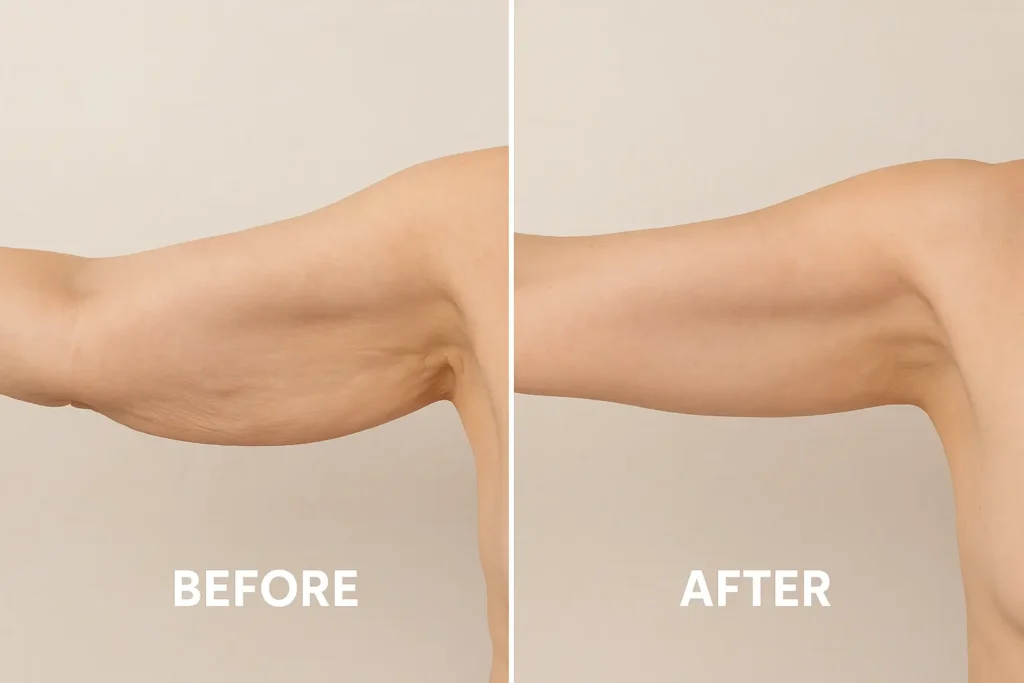
No single treatment suits everyone with loose skin.
At LA LIPO, we offer home-based cosmetic appointments in selected UK areas, so you can discuss available procedures without necessarily travelling to a clinic.
During your consultation, you can ask about:
- Whether the area of concern involves loose skin, remaining fat or both
- Which treatments may be appropriate
- The evidence supporting the proposed procedure
- Possible side effects and complications
- Recovery and aftercare requirements
- Treatment costs and alternatives
We believe it’s important to understand what a procedure can and cannot offer before deciding whether it’s right for you.
Interested in finding out more?
Contact LA LIPO to discuss your concerns, our available home-based services and the suitability assessment required before treatment.
Frequently Asked Questions About Skin Tightening After Weight Loss
Will loose skin go away naturally after weight loss?
Some skin may gradually retract after weight loss, but results vary by individual. Age, genetics, skin quality and the extent of previous stretching can all play a part. Significant excess skin may remain.
Can HIFU tighten loose stomach skin after weight loss?
HIFU is used in cosmetic skin-tightening procedures, but it cannot reliably remove excess abdominal skin. Whether treatment is appropriate depends on the amount of laxity, the equipment used and individual suitability. Visible improvement cannot be guaranteed.
Does RF Microneedling help with loose skin on the arms?
RF Microneedling can address certain skin texture and laxity concerns. However, evidence supporting results for a particular treatment area and device should be considered before making claims about effectiveness. It cannot replace surgical removal of substantial excess skin.
Can skin tightening treatments remove a hanging stomach?
Non-surgical skin tightening cannot reliably remove a significant overhang of excess abdominal skin. If this is your main concern, a consultation with an appropriately qualified surgical professional may be more useful.
How many HIFU or RF Microneedling sessions will I need?
There is no universal number of sessions suitable for everyone. Treatment planning depends on the device, proposed treatment area, individual circumstances and supporting evidence. More sessions do not guarantee better results.
How long does it take to see results from skin tightening?
Any visible response depends on the procedure and how your tissue responds. Changes associated with collagen remodelling may develop gradually, but there is no guaranteed timetable or outcome.
Is there downtime after HIFU or RF Microneedling?
Recovery varies. Some people experience temporary redness, swelling or tenderness. RF Microneedling may also cause pinpoint bleeding or temporary changes in the treated skin. More significant reactions and complications can take longer to resolve.
Can I have skin tightening after bariatric surgery?
Possibly, but you should consult your treating medical team first. Nutritional status, wound healing, weight stability and other health considerations can affect whether an elective cosmetic procedure is appropriate.
Are skin tightening results permanent?
No permanent result should be assumed. Skin continues to change with age, weight fluctuations and other factors. The duration and extent of any cosmetic improvement vary, and some people may not notice a difference.
Which is better after weight loss: HIFU or RF Microneedling?
Neither is automatically better. They use different technologies and have different risks. The choice depends on the concern being addressed, the specific equipment, available clinical evidence and individual suitability.
Can loose skin cause medical problems?
Sometimes. Larger skin folds may cause friction, irritation or recurrent infections. If you’re experiencing these symptoms, contact your GP for assessment and appropriate advice.
How do I arrange a skin tightening consultation with LA LIPO?
Contact LA LIPO with your location and a brief description of the area you’d like to discuss.
Our team can explain which home-based services are available in your area and what information is needed to assess whether a treatment may be suitable.
Important information: This article is intended as a general guide to loose skin after weight loss and the cosmetic treatments available. HIFU, RF Microneedling and Cryolipolysis all have potential side effects and risks. Results differ from person to person, and none of these procedures can promise to remove excess skin or deliver a specific outcome. Before deciding on treatment, your practitioner should review your medical history, assess your suitability and explain what the procedure involves, including its limitations and possible complications. If you’ve had weight loss surgery or are experiencing discomfort or skin problems, speak to your GP or healthcare team before exploring cosmetic treatment options.*