
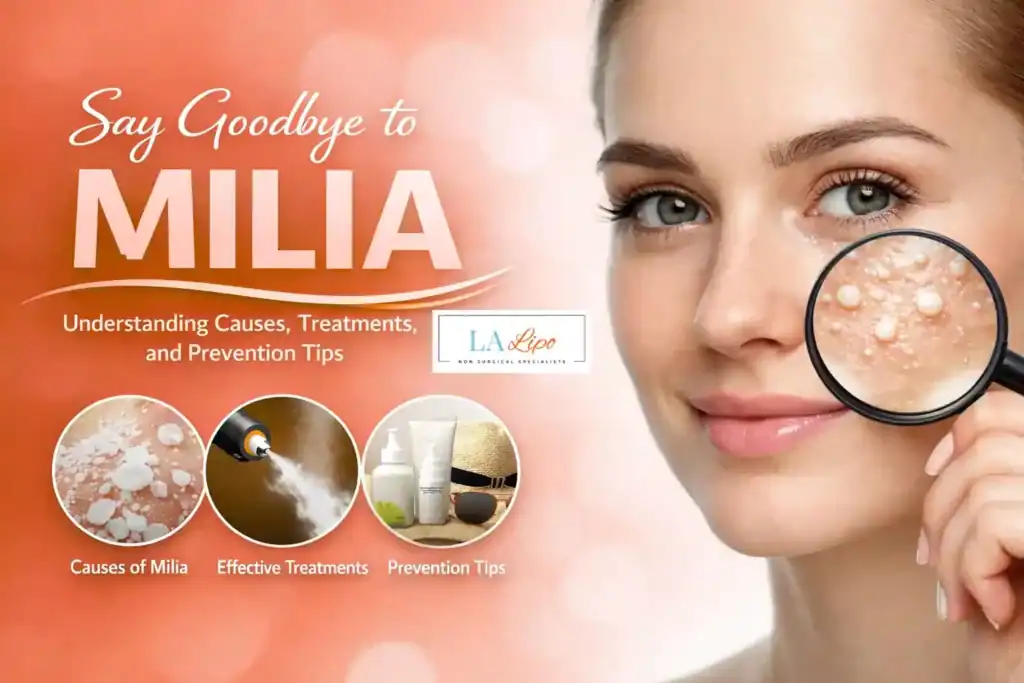
Those little white bumps that sometimes appear around your eyes or on your cheeks can be frustrating, especially when they seem to stick around despite your usual skincare routine.
They could be milia.
These small bumps are quite common and usually harmless. They aren’t the same as spots or whiteheads, and squeezing them won’t make them disappear.
Although milia rarely cause medical problems, some people prefer to have them removed for cosmetic reasons.
In this guide, we’ll cover what causes milia, why they develop, which treatments may be considered, and whether you can reduce the chances of new ones appearing.
We’ll also explain how LA LIPO’s home-based cosmetic skin treatment service may help with suitable lesions.
What Are Milia?
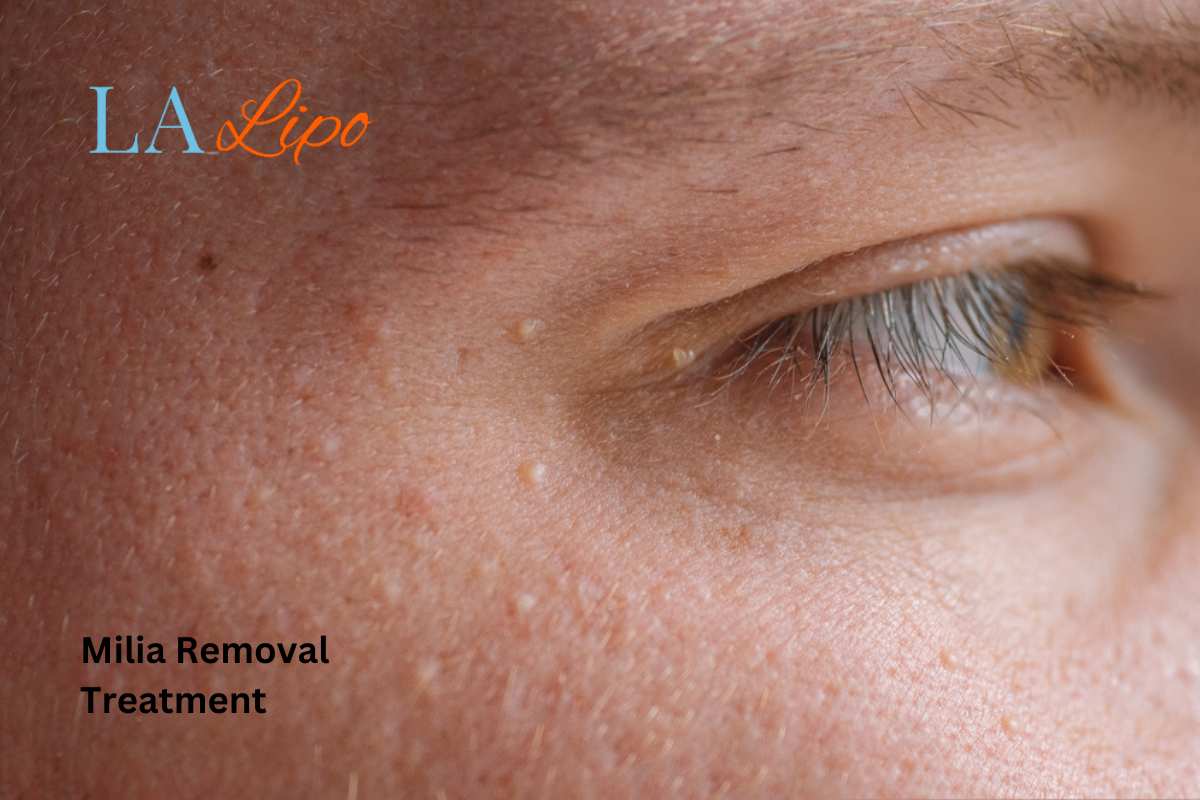
Milia are small cysts that contain keratin, a protein naturally found in your skin, hair, and nails.
They appear as tiny, firm, white or yellowish bumps just beneath the skin’s surface.
You’ll most often notice them on the face, particularly around the eyes, nose, forehead and cheeks, although they can develop elsewhere.
Unlike acne spots, milia aren’t usually inflamed and don’t have an opening that allows their contents to be squeezed out.
They’re generally painless and aren’t contagious.
Some disappear without treatment, while others remain for months or longer.
What Causes Milia to Develop?
It’s not always possible to identify exactly why someone develops milia.
They form when keratin becomes trapped beneath the skin’s surface, creating a small cyst.
Several factors may contribute to their development.
Natural Skin Changes
Milia can appear at almost any age, including in newborn babies and adults.
Sometimes they develop without an obvious trigger. Having milia doesn’t necessarily mean you’re using the wrong skincare products or not cleansing your skin properly.
Previous Skin Damage
Have you noticed small white bumps appearing after a burn, blister or skin procedure?
Milia can sometimes develop as damaged skin heals. These are known as secondary milia.
They may occur following certain skin injuries, inflammatory conditions or cosmetic procedures.
Sun Exposure
Long-term sun exposure can affect the skin’s structure and appearance.
Certain forms of milia have been associated with sun-damaged skin, although sun exposure isn’t responsible for every case.
Skincare Products
Some people notice milia while using richer skincare products, particularly around the eyes.
However, don’t assume a particular cream or oil is responsible. The relationship between skincare products and milia isn’t always straightforward.
Changing products may help your general skincare routine, but it won’t necessarily remove existing cysts.
Different Types of Milia
Although milia often look similar, they don’t all develop for the same reason.
Primary milia
These can appear without a previous skin injury. They’re common in newborns but can also develop in older children and adults.
Secondary milia
Sometimes milia develop as the skin heals following an injury, such as a burn or blister. They can also appear after certain skin treatments or procedures.
Multiple eruptive milia
This is a less common type of milia where clusters of small white bumps appear over a short period of time, rather than developing individually.
Milia en plaque
A rare condition where groups of milia appear within a slightly raised area of skin.
Not every small white bump is a milium. Other skin conditions can look similar, so an appropriately qualified healthcare professional should check an uncertain diagnosis.
Do Milia Need to Be Removed?
Usually, no.
Milia are generally benign and don’t require treatment simply because they’re present.
Some clear naturally, while others can persist.
If they aren’t causing any problems, leaving them alone is a perfectly reasonable option.
However, if you’re unhappy with their appearance, you may want to explore professional removal.
The best approach depends on the bumps’ location, their diagnosis, and your individual circumstances.
What Treatments Are Available for Milia?
Several approaches can help manage milia, but not every method suits every person.
Professional Milia Extraction
For some adult milia, a properly trained professional may use a sterile instrument to open the cyst’s surface and carefully remove its contents.
Don’t attempt this yourself.
Trying to pierce or squeeze milia at home can damage the skin and increase the risk of infection or scarring.
Cryotherapy and CryoPen Treatment
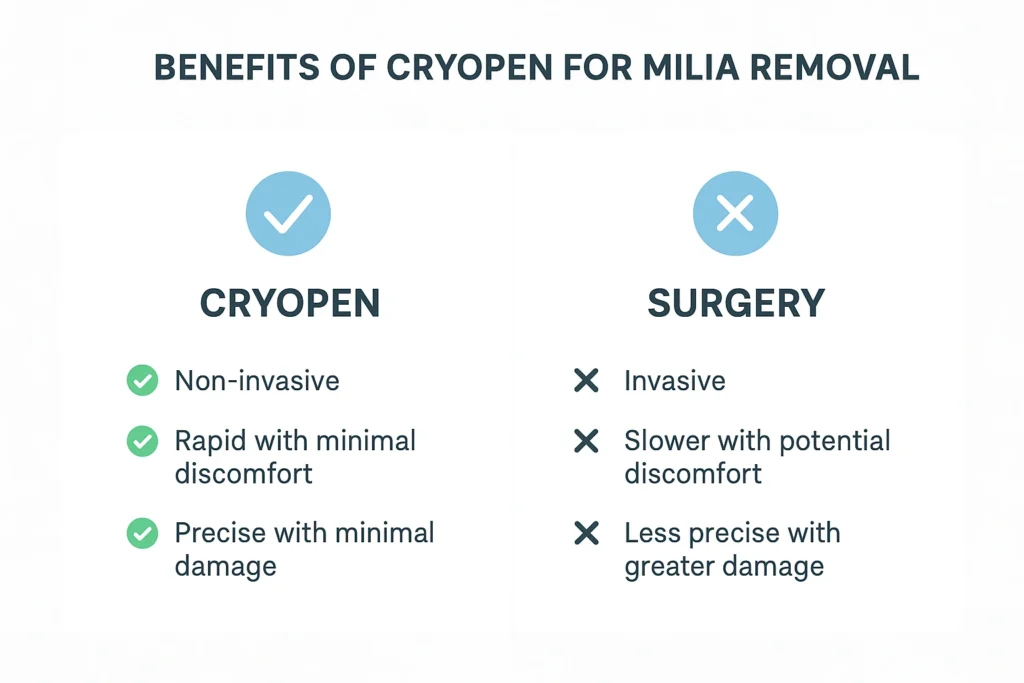
Cryotherapy uses very low temperatures to treat selected skin lesions.
CryoPen is a device designed to deliver targeted freezing to a small area of skin.
Cryotherapy is one of the methods that may be considered for certain milia, although it isn’t necessarily the best option for every lesion.
Freezing can also affect the surrounding skin, and possible complications include blistering, pigmentation changes, infection, and scarring.
Particular care is needed around the eyes, where the skin is delicate, and treatment may be inappropriate without specialist assessment.
At LA LIPO, we offer selected cosmetic skin treatments in customers’ homes, subject to location, practitioner availability and individual suitability.
If you’re interested in milia removal, our team can explain the services available and whether further medical assessment is needed before treatment.
Topical Skincare Treatments
Certain topical treatments, including retinoids, may sometimes be recommended for particular types of milia.
These products aren’t suitable for everyone, and they don’t reliably remove every established cyst.
Don’t apply strong exfoliating products or retinoids near the eyes without appropriate professional advice.
A dermatologist or other suitably qualified healthcare professional can advise whether a topical treatment is appropriate.
What Are the Risks of Milia Removal?
It’s worth understanding the possible side effects before deciding to have any cosmetic skin procedure.
Depending on the method used, the treated area may become red, swollen or tender.
Other possible reactions include:
- Blistering or scab formation
- Temporary skin sensitivity
- Changes in pigmentation, which may occasionally be permanent
- Infection
- Scarring
- Incomplete removal or recurrence
Freezing treatments may carry a particular risk of noticeable pigmentation changes in some skin tones.
Recovery varies between individuals, and there isn’t a guaranteed healing time.
Your practitioner should explain the risks, aftercare requirements and expected recovery before treatment.
If you develop increasing pain, spreading redness, discharge or other concerning symptoms afterwards, seek medical advice.
Can You Prevent Milia from Coming Back?
There’s no guaranteed way to stop milia from developing.
Some people experience them only once, while others find that new bumps appear over time.
However, looking after your skin can still be worthwhile.
Keep Your Skincare Routine Gentle
A mild cleanser and suitable moisturiser can help maintain your skin barrier.
You don’t need to scrub aggressively or use multiple exfoliating products to remove milia.
Be Careful with Exfoliation
Exfoliating products may suit some people, but overuse can irritate the skin.
If your skin is sensitive, or you’re considering exfoliating around the eyes, seek appropriate advice first.
Protect Your Skin from the Sun
Regular sun protection is important for maintaining skin health.
Using broad-spectrum sunscreen, alongside other sun-protection measures, can help reduce UV damage.
However, sunscreen cannot guarantee that milia won’t develop.
Avoid Picking at Your Skin
It can be tempting to squeeze a small white bump, especially when it looks similar to a whitehead.
Milia don’t respond to squeezing the same way acne spots do.
Attempting to remove them yourself can cause unnecessary damage.
When Should You Seek Medical Advice?
Most milia aren’t a cause for concern.
However, don’t assume every small white or yellow bump is harmless.
Arrange an assessment with an appropriate healthcare professional if a lesion:
- Changes in size, colour or appearance
- Bleeds or develops an open sore
- Becomes painful or inflamed
- Fails to heal
- Appears unusual or is difficult to identify
It’s also sensible to seek medical advice if you develop numerous bumps unexpectedly or have a persistent skin concern.
Resolve any uncertainty about the diagnosis before considering cosmetic removal.
Exploring Milia Removal with LA LIPO
If you’ve been living with persistent milia and would like to explore your options, LA LIPO can help you understand what services may be available.
We provide selected cosmetic treatments in customers’ homes across parts of the UK, so you can enquire about treatment without arranging a clinic visit.
When you contact us, we’ll discuss your location, the area of skin you’re concerned about and what assessment may be required.
We’ll also explain the proposed procedure, possible risks, costs and whether your concern falls within the scope of our service.
Not every lesion is suitable for cosmetic treatment, and we may recommend medical assessment instead.
Interested in finding out more?
Contact LA LIPO to discuss milia removal enquiries and available home-based appointments.
Frequently Asked Questions About Milia

1. Can milia disappear without treatment?
Yes. Some milia clear naturally, although this can take time.
Milia in newborn babies often disappear without intervention. In adults, some remain for much longer.
If they’re harmless and aren’t bothering you, treatment may not be necessary.
2. Can I squeeze milia like a normal spot?
It’s best not to.
Milia are small cysts beneath the skin, not ordinary whiteheads.
Squeezing or piercing them yourself can damage the surrounding skin and may lead to infection or scarring.
3. Is CryoPen suitable for removing milia?
Cryotherapy can be considered for selected milia, but it isn’t appropriate for every lesion.
Suitability depends on the diagnosis, location, skin characteristics and the practitioner’s expertise.
A consultation and, where necessary, medical assessment should take place before treatment.
4. Can CryoPen be used for milia around the eyes?
The skin around the eyes is particularly delicate.
Freezing treatment in this area requires careful consideration because of the potential for injury to nearby tissue.
Some lesions may need assessment or treatment by an appropriately qualified medical specialist rather than a cosmetic practitioner.
5. Does milia removal hurt?
The experience depends on the treatment method, location and individual sensitivity.
Some people experience discomfort during or after a procedure.
Your practitioner should explain what the proposed treatment may feel like and what side effects could occur.
6. Can milia removal leave a scar?
Yes, scarring is possible with procedures that damage or remove skin tissue.
Although not everyone develops a scar, no practitioner should guarantee scar-free removal.
Pigmentation changes are another possible complication, particularly following freezing treatments.
7. How long does skin take to heal after CryoPen treatment?
Healing times vary.
Some people experience redness, tenderness, blistering or scabbing following freezing.
The skin may take several weeks or longer to settle, and pigmentation changes can persist beyond the initial healing period.
Your practitioner should provide suitable aftercare guidance.
8. Can milia return after professional removal?
Yes.
Removing one milium doesn’t prevent another from developing nearby or elsewhere.
Some people are more prone to developing milia, and no skincare routine guarantees prevention.
9. Are milia caused by poor hygiene?
No.
Milia aren’t necessarily related to how frequently you wash your face.
They can develop in people with all kinds of skincare routines, including those who cleanse and moisturise regularly.
10. Can face creams or eye creams cause milia?
Certain products may be associated with milia in some circumstances, but it’s difficult to establish that a particular cream caused them.
If you’re concerned about your skincare routine, a qualified professional can help you review which products are appropriate for your skin.
11. Is milia removal suitable for darker skin tones?
Suitability needs to be assessed individually.
Some skin tones may be more susceptible to noticeable pigmentation changes following freezing or other procedures.
Your practitioner should discuss these risks and any suitable alternatives before treatment.
12. Can babies have milia removed?
Milia are very common in newborn babies and usually disappear naturally.
Cosmetic removal is generally unnecessary.
Parents should avoid squeezing the bumps or applying adult exfoliating products to a baby’s skin.
If you’re unsure about the skin condition, seek advice from an appropriate healthcare professional.
13. Can LA LIPO provide milia removal at home?
LA LIPO offers selected home-based cosmetic skin treatments in parts of the UK.
Contact our team with your location and details of your concern. We can explain which services are available, what assessment is required and whether treatment may be appropriate.
Important information: This article is for general information and doesn’t replace medical advice or diagnosis. Milia are usually harmless and may not need treatment. Cosmetic removal procedures, including cryotherapy, carry risks such as skin irritation, pigmentation changes, infection and scarring. Treatment suitability and outcomes vary. Any unexplained, changing, or concerning skin lesion should be assessed by an appropriately qualified healthcare professional before considering cosmetic treatment.
For further information, please call us on 03300 100 238